Image
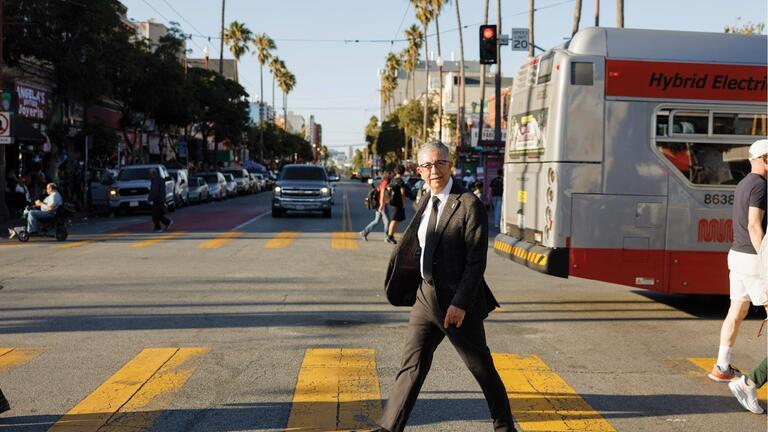
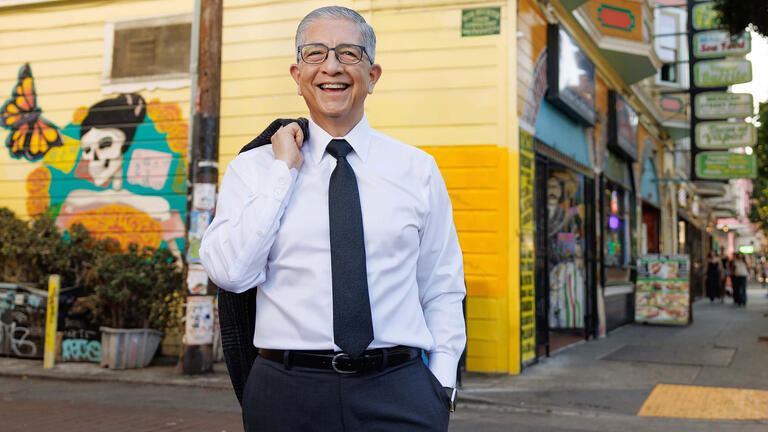
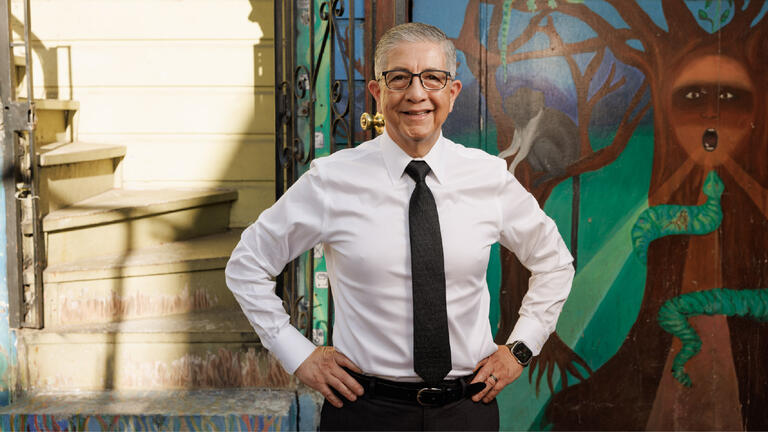
Salvador D. Aceves ’83, EdD ’95, USF’s new president and first lay president, was born in San Francisco, educated at USF, and has served as a professor and an administrator at USF. Now he’s back — and looking forward.
Q: Tell us about yourself.
A: I was born and raised in the city, first living in the Mission Dolores neighborhood where my parents landed when they arrived in San Francisco from Mexico. And then later my parents bought a home out in the Excelsior, so we moved when I was about 3.
Q: Schooling?
A: I attended St. John Catholic School on Chenery Street in Glen Park, followed by Sacred Heart High School. During those years, I developed a deep love for the arts — especially music and theater. I even joined the Young Conservatory at the American Conservatory Theater. One of my greatest joys was bringing theater into schools.
Q: And you sang, too?
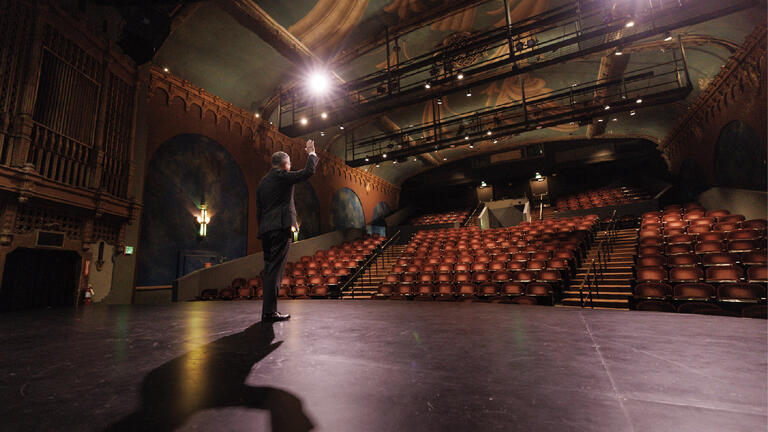
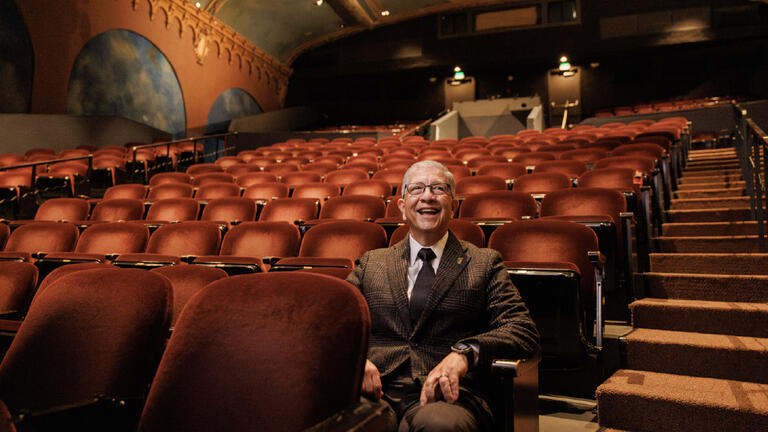
A: Yes. Growing up in San Francisco, I developed a fondness for music, especially singing. Music runs in my family, and I began performing at family gatherings and later at small venues in the Mission neighborhood. Two I remember fondly were the Mission and the York theaters.
A family friend who had started a record label in San Francisco invited me to record a few songs for a demo. He traveled to Mexico City and shared it with Columbia Records. While they passed on becoming his music distributor, they offered me a multi-year recording contract. My stage name was Chavita, meaning Little Salvador. During that time, I led something of a parallel life — immersed in the mariachi music world while also continuing my studies in San Francisco.
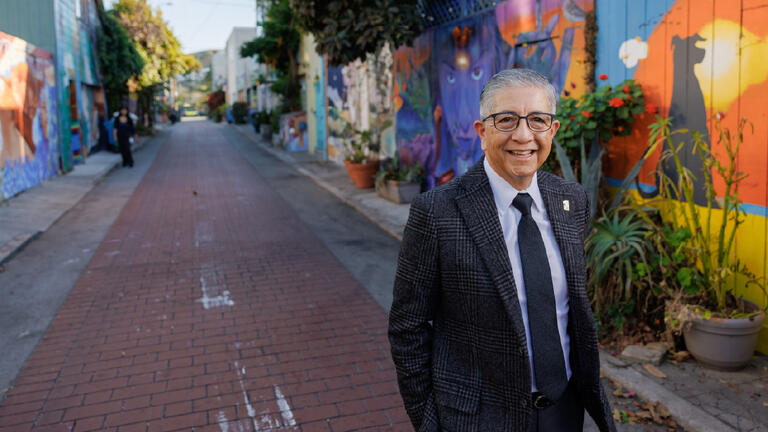
Q: And then USF for college? Why USF?
A: My parents often spoke with friends and neighbors who shared what a great experience their children had at USF. As devout Catholics, my parents couldn’t imagine a better place for me to continue my education. For me, the true attraction was the opportunity to pursue a faith-based education while staying rooted in my home city of San Francisco.
Q: What did you think of USF?
A: I loved it, though it was hard at first. The transition from high school to college — as a first-generation student — can be difficult to fully grasp. Suddenly, you’re choosing classes and encountering things you never even thought to think about. I arrived anxious, curious, and at times overwhelmed by the choices. But I quickly discovered that if you ask for help, USF helps you. It was designed for that. It still is. USF provides both freedom and a safety net: a place where you are encouraged to explore, but also supported every step of the way. I was fortunate to be guided by excellent professors and advisers, and through them, I experienced firsthand the transformative power of a Jesuit education — I lived it.
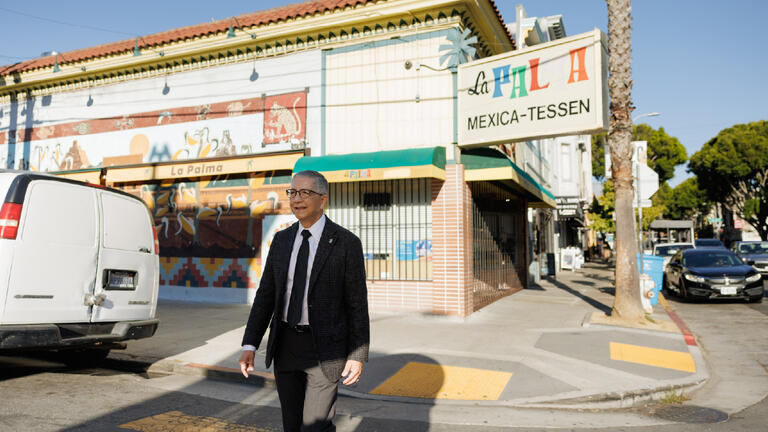
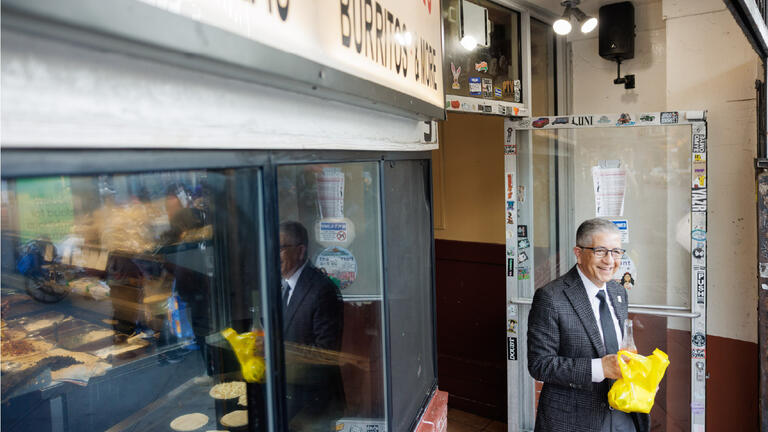
"I love spending time on Clement Street — not just for the food, but for the life and energy. I also love visiting Chinatown and heading down to the heart of the Mission. Each of these neighborhoods holds special memories for me, whether due to family gatherings, music, or favorite restaurants."
Q: Did you live at home while you attended USF?
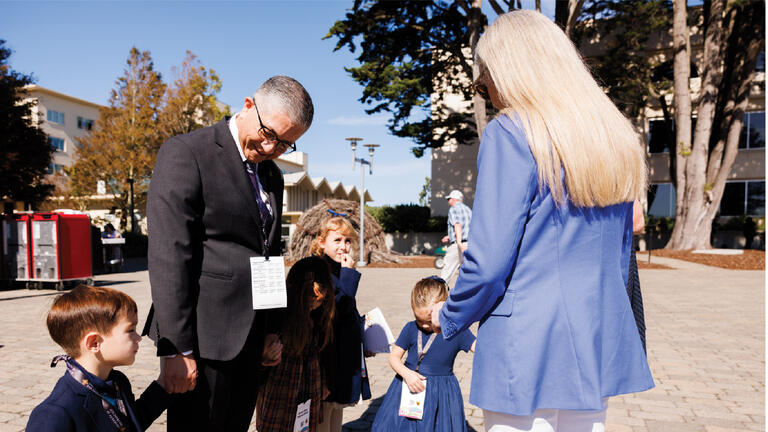
A: Yes. One custom I grew up with was always having family dinners together. When my dad came home from work, we would gather around the table and share our day. So when I started college, my parents still said, “You’ll be home for dinner at 5:30, right?” As I became more involved on campus, it became harder to make it home at that time, and gradually my parents began to understand. That experience reminds me of something important: When we admit a student to USF, we are really admitting their family too.
Q: What was your major?
A: Accounting. I took a few accounting courses, and it just clicked. USF has always had remarkable faculty, and one who stood out for me was Dr. David Weiner. I remember a story in the Foghorn student newspaper that said David Weiner is responsible for great accounting students and fewer accounting students. He was challenging but fair and an excellent instructor. The strength of the program was clear: Accounting firms were actively recruiting USF students because of its reputation. I accepted an offer with the San Francisco office of Price Waterhouse, where I worked for several years before moving into the private sector with Citicorp. I joined their tax department and spent six years there.
Q: And then USF called?
A: I was fortunate that the dean invited me to teach some accounting courses as an adjunct professor — thanks in part to my involvement as an undergraduate, when I had started the student accounting association. Back then, I often helped classmates with their homework and became very active in tutoring, including working with several basketball players. I’d attend their games and cheer them on, which created a genuine connection between the classroom and the students. That sense of connection ultimately drew me from part-time teaching into a full-time faculty role at USF. While teaching, I also pursued my EdD in organization and leadership at USF. At the same time, I became increasingly involved in curricular design as well as planning and budgeting. In 2005, I was appointed to a five-year term as vice provost for planning and budget. After that term, Fordham University invited me to join its provost’s office. My wife and I decided to make the move, and we relocated to New York City in 2011. Before leaving USF, I had worked closely with Fr. John Fitzgibbons on planning and budget, and we told each other maybe one day “we’ll work together again.”
Not long after, while I was settling in at Fordham, Fr. Fitzgibbons — by then president of Regis University in Denver — called to say his CFO had just announced his retirement. I flew to Denver, met with the team, interviewed, and quickly felt it was the right fit. In 2014, I joined Regis as chief financial officer, a role I held for eight years until the board selected me to be president. I was honored to step into that office in January 2023.
When Carol Aceves first met Salvador Aceves, her name was Carol Fiorina. She and Salvador meet in the fifth grade in the guitar club at St. John Catholic School in Glen Park. Carol went on to St. John Ursuline High School, San Francisco State for college, and USF for a master's degree in teaching English as a second language. Like her husband, Carol loves music and the theater. She says she sings every chance she gets, "especially to my mother, who is a captive audience. For more than 10 years now, Carol has been a certified caregiver, first for her father-in-law, and now for her 95-year-old mother, who has advanced dementia. "I hope to one day become actively involved at USF," Carol says. She would like to do something student-centered. She also was a basketball fan during her college days and says she looks forward to attending Dons games once her schedule allows.
Q: And then USF called again?
A: While I was deeply engaged and settled at Regis University, the pull to come home grew strong. Our family is here — my sister, who is also a USF graduate, brother-in-law, and their five children live in California, four of whom now have little ones of their own. I was drawn back to a city that holds a special place in my heart, and to a campus and community that have always lived within it. The opportunity to return home to this university felt both natural and deeply meaningful — a wonderful homecoming.
Q: You’re a layperson. Does that matter?
A: I can’t say if my being a layperson matters. The Jesuits had the vision of forming lay leaders who could be missioned to lead the university, and I see myself as part of that vision. I’m a proud graduate of the Ignatian Colleague program, cohort 10. I would add that perhaps my background is helpful. Having been a faculty member, an administrator, and having worked in industry, I bring a particular perspective on our challenges: How do we build a university that is sustainable? How can our financial plan enable and enhance our formative Jesuit Catholic education, both on campus and in San Francisco?
What can we do to help create a just and humane world?”
Salvador D. Aceves
Q: What is that role?
A: As a Jesuit Catholic institution, we’re attuned to members of our community who are living at the margins, who are neglected. Our role is one of stewardship. Our mission is to form skilled professionals and reflective, ethical leaders who are dedicated to serving the common good. What sets us apart, I believe, is compassionate leadership. That is our distinction — and it’s our contribution to the city, to the state, and ultimately to the planet.
Q: What is your role?
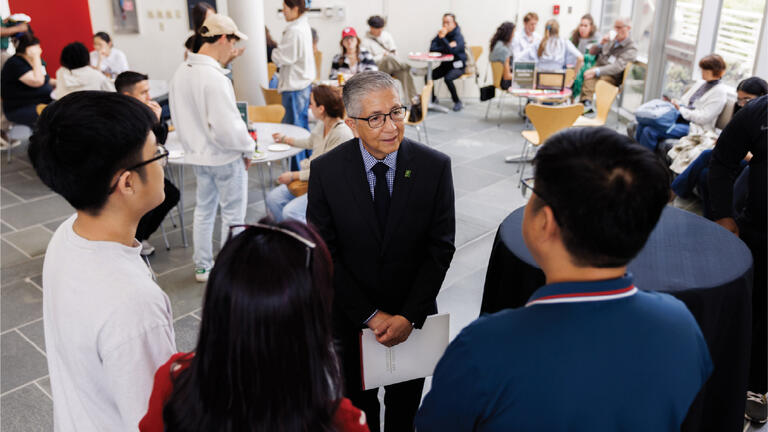
A: My role is to create the conditions for Jesuit Catholic education to flourish. That means removing obstacles that keep people from doing the great work we invite them to do. I collaborate closely with my cabinet, meet with faculty to listen to their needs, engage with alumni and friends of the university, and partner with city leaders. And as much as possible, I spend time with our students.
Q: Spend time with students? Really?
A. Yes. I hope students will see me not only when I’m having lunch in the cafeteria but also when I’m attending their performances or just walking across campus on my way to a meeting. If a student stops me and says, I just need a moment, my response will always be, Come on by. My door is open.